Hit by an Uninsured Driver in Virginia or North Carolina? What Happens Next

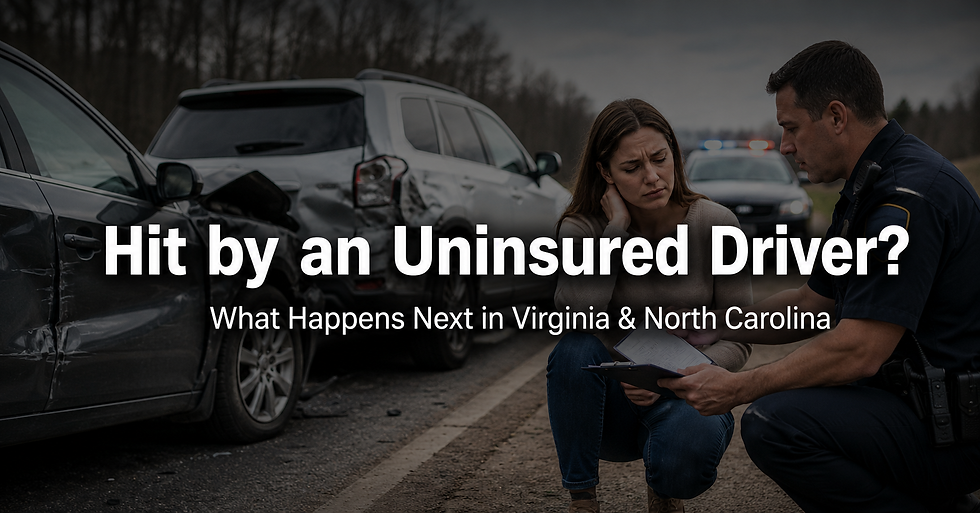
You were injured in a car accident that someone else caused. You expected the responsible driver’s insurance company to cover your medical expenses, lost income, vehicle damage, and other losses.
Then you discover that the driver does not have insurance—or does not have enough coverage to pay for everything.
This can make an already stressful accident feel even more overwhelming. However, the absence of adequate insurance does not always mean you are out of options. Your own automobile insurance policy may include uninsured or underinsured motorist coverage that can help compensate you.
These claims can be complicated, especially when injuries are serious or several insurance policies may apply. Understanding the basics can help you avoid decisions that could weaken your claim.
What Is Uninsured Motorist Coverage?
Uninsured motorist coverage, commonly called UM coverage, may apply when the person responsible for an accident has no applicable liability insurance.
It may also apply in certain accidents involving an unidentified hit-and-run driver. Virginia’s State Corporation Commission explains that uninsured motorist coverage provides bodily injury and property damage protection when an accident is caused by an uninsured motorist or a hit-and-run driver.
Depending on the circumstances and the terms of your policy, uninsured motorist coverage may help compensate you for losses such as:
Medical expenses
Lost wages and reduced earning capacity
Pain and suffering
Permanent injuries or disabilities
Vehicle and property damage
Other losses connected to the accident
The exact coverage available will depend on your policy, the state law that applies, the nature of the accident, and the evidence supporting your damages.
What Is Underinsured Motorist Coverage?
Underinsured motorist coverage, or UIM coverage, applies differently.
The at-fault driver may have insurance, but their policy limits may not be sufficient to cover the full value of your injuries and losses.
For example, a serious accident could result in surgery, hospitalization, months away from work, ongoing rehabilitation, or a permanent impairment. The responsible driver’s liability coverage might pay part of those losses but still leave a substantial unpaid balance.
Underinsured motorist coverage may provide an additional source of compensation, subject to the policy’s limits and applicable state law.
Virginia Uninsured and Underinsured Motorist Claims
Virginia automobile policies generally include uninsured and underinsured motorist protection. Virginia law addresses this coverage under Virginia Code § 38.2-2206.
Virginia’s minimum automobile insurance limits increased for policies effective on or after January 1, 2025. The minimum bodily injury limits are now generally $50,000 for one injured person and $100,000 for two or more injured people in one accident, along with $25,000 for property damage. Corresponding minimum uninsured and underinsured motorist limits were also updated.
However, minimum coverage can still be insufficient when an accident causes catastrophic injuries, permanent limitations, or significant time away from work.
Virginia also changed how underinsured motorist coverage may operate for certain policies issued or renewed after July 1, 2023. Because policy dates and coverage selections can affect the amount potentially available, an attorney should review the policy and applicable endorsements rather than assuming how much coverage exists.
North Carolina Uninsured and Underinsured Motorist Claims
North Carolina also requires uninsured motorist protection as part of automobile liability coverage. The North Carolina Department of Insurance explains that UM coverage protects covered individuals when an uninsured at-fault driver causes injuries and may also provide property damage coverage.
Important North Carolina insurance changes took effect for policies issued or renewed beginning July 1, 2025. Underinsured motorist protection is now included in new and renewed policies, including policies carrying the state’s minimum liability limits.
North Carolina’s current minimum liability limits are generally:
$50,000 for bodily injury to one person
$100,000 for bodily injury to two or more people in one accident
$50,000 for property damage
A policy may provide higher limits, and other policies may also apply depending on the injured person’s household, the vehicle involved, and the circumstances of the collision.
Is Your Insurance Company Automatically on Your Side?
Not necessarily.
An uninsured or underinsured motorist claim is generally made through your own insurance coverage. That does not mean the insurer will automatically agree with your description of the accident or the value of your damages.
The insurance company may investigate:
Who caused the collision
Whether you contributed to the accident
Whether your injuries were caused by the crash
Whether your treatment was necessary
Whether you complied with policy requirements
The amount of your lost income
Whether another policy applies
The reasonable value of your overall claim
Your insurer may request medical records, employment documentation, recorded statements, authorizations, photographs, and other evidence.
You should take the claim seriously even though you have been paying premiums to the company handling it.
Why Fault Is Especially Important in Virginia and North Carolina
Virginia and North Carolina generally follow a strict contributory negligence rule.
Under this rule, an injured person who is found to have contributed to an accident may be prevented from recovering compensation. Insurance companies may therefore look for statements or evidence they can use to argue that the injured person was partially responsible.
Examples of allegations may include:
Speeding
Failing to keep a proper lookout
Following too closely
Entering an intersection without sufficient caution
Being distracted
Failing to take reasonable evasive action
Do not assume fault will be obvious simply because the other driver received a citation or admitted responsibility at the scene. A thorough investigation may still be necessary.
What Should You Do After an Accident With an Uninsured Driver?
Report the accident to law enforcement
A police report can help document the drivers, vehicles, insurance information, witnesses, road conditions, and initial statements made at the scene.
Obtain medical treatment
Seek appropriate medical attention and follow your healthcare providers’ instructions. Delaying treatment can affect your health and may also allow an insurance company to question whether your injuries were caused by the accident.
Notify your insurance company
Your policy may require prompt notice of the accident and any potential UM or UIM claim. Report the collision, but be cautious about providing detailed recorded statements before you understand your rights.
Save the evidence
Preserve photographs, videos, medical bills, repair estimates, wage records, receipts, correspondence, and other documentation connected to the accident.
Review every available policy
Coverage may not be limited to the policy on the vehicle you occupied. Depending on the facts and applicable law, policies covering other vehicles or household members may need to be reviewed.
Avoid signing an early settlement
A quick payment may not reflect the full value of your claim, particularly when the long-term effects of your injuries are not yet known.
Can You File a Lawsuit Against an Uninsured Driver?
You may have the legal right to pursue the responsible driver directly. However, obtaining a judgment and collecting money are two different issues.
A driver without insurance may also have limited income or assets. That is one reason uninsured motorist coverage can be so important.
Even when your own insurance company may ultimately pay some or all of the claim, legal procedures involving the at-fault driver may still be required. The process depends on the applicable state law and the specific insurance contract.
What If Several People Were Injured?
Insurance policies usually contain both per-person and per-accident limits.
When several people are seriously injured in the same collision, the at-fault driver’s available liability coverage may have to be divided among multiple claims. This can leave each injured person with substantially less than the value of their individual damages.
Uninsured or underinsured motorist coverage may become particularly important in these situations. Identifying every potentially applicable policy should be an early priority.
Why These Claims Become Complicated
UM and UIM claims may involve questions about:
Which state’s law applies
When the policy was issued or renewed
The limits shown on the declarations page
Policy exclusions and endorsements
Whether multiple policies provide coverage
Whether coverage can be combined
Notice and consent requirements
The value of future medical treatment
The extent of lost income or diminished earning ability
Whether a settlement with the at-fault insurer affects another claim
A mistake made early in the process can affect the compensation available later.
Speak With a Virginia and North Carolina Personal Injury Attorney
Being hit by an uninsured or underinsured driver does not necessarily leave you without a way to recover compensation.
The attorneys at Charles M. Aaron, Attorneys at Law can review the accident, investigate the available insurance policies, evaluate your injuries and losses, and explain the legal options that may apply to your situation.
If you were injured in a car accident in Virginia or North Carolina, contact Charles M. Aaron, Attorneys at Law at 276-638-3866 to discuss your case.
{This article is provided for general informational purposes only and is not legal advice. Insurance coverage and legal rights depend on the specific facts, policy language, policy dates, and laws applicable to each case.}
Frequently Asked Questions
Does uninsured motorist coverage apply to a hit-and-run accident?
It may. Coverage can apply when the responsible driver cannot be identified, but specific reporting, notice, evidence, and policy requirements may apply. Report the accident promptly and preserve any available witness statements or video footage.
Will my insurance rates increase if I make an uninsured motorist claim?
The effect on premiums can depend on the policy, the facts of the accident, the insurer’s rating practices, and state insurance rules. Do not avoid reporting a potentially serious claim solely because you are worried about a possible rate change.
Can passengers use uninsured motorist coverage?
Passengers injured by an uninsured or underinsured driver may have coverage through the vehicle they occupied, their own automobile policy, or another applicable household policy. Each potentially relevant policy should be reviewed.
What happens if the at-fault driver has only minimum insurance?
The driver’s liability insurance may pay up to its policy limits. If your damages exceed those limits, underinsured motorist coverage may provide an additional source of compensation, subject to the applicable policy and state law.
Can I handle a UM or UIM claim without an attorney?
You may communicate with the insurance companies yourself, but serious injury claims can involve disputed fault, medical evidence, policy interpretation, procedural requirements, and disagreements over value. Consulting an attorney can help you understand your options before signing documents or accepting a settlement.


Comments