Winter Weather Wrecks: Who Pays After a Crash on Icy Virginia Roads?
- Scott Andrews
- Dec 10, 2025
- 5 min read

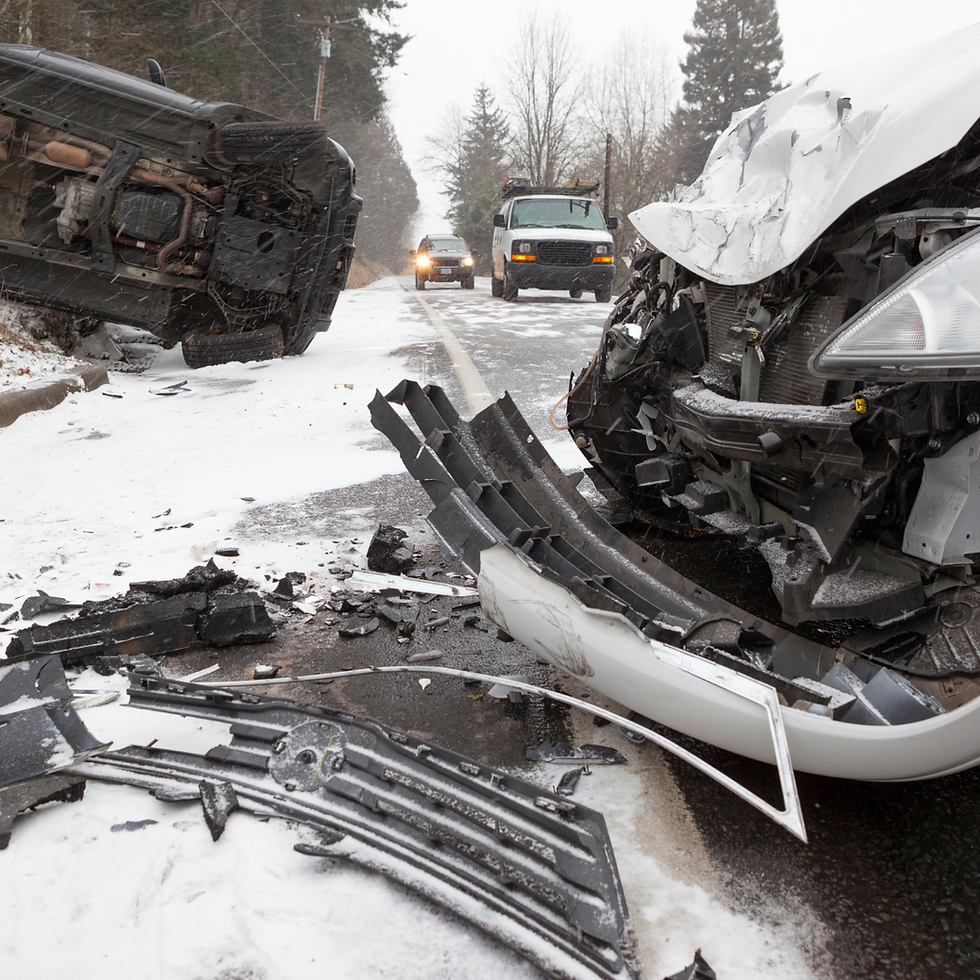
When winter hits southern Virginia, roads like U.S. 220 and 58 around Martinsville can go from “just wet” to “sheet of ice” in a heartbeat. Snow, freezing rain, and black ice lead to spin-outs, chain-reaction crashes, and rear-end collisions—all in areas where people drive at highway speeds every day.
A big question we hear after these wrecks is:
“If the roads were bad, is anyone really at fault—or is it just an ‘act of God’?”
Under Virginia law, bad weather almost never lets a negligent driver off the hook. Here’s how fault works in winter crashes, and why speed, following distance, and Virginia’s strict negligence rules matter so much.
Weather Isn’t a Free Pass in Virginia
Every driver in Virginia has a legal duty to operate their vehicle with reasonable care under the circumstances. That duty doesn’t disappear just because it’s snowing or the road is icy.
Courts and insurance companies look at questions like:
Did the driver slow down for the conditions?
Were they leaving enough space to stop on slick pavement?
Were they paying attention—or were they distracted?
Did they choose to be out driving when they knew conditions were dangerous?
If a reasonable driver would have behaved more carefully under the same conditions, the at-fault driver can be held responsible—even if ice or snow contributed to the crash.
Speed: “Too Fast for Conditions” = Negligence
Virginia has a specific reckless driving law for going too fast for the highway and traffic conditions, not just for going over the posted speed limit.
Under Va. Code § 46.2-861, a driver can be guilty of reckless driving if they:
“Exceed a reasonable speed under the circumstances and traffic conditions existing at the time, regardless of any posted speed limit.”
On an icy road, “reasonable speed” may be far below the posted limit. That means:
55 mph might be safe on a dry, clear day on Route 220.
That same 55 mph could be reckless on black ice or heavy sleet.
In a winter-weather injury case, evidence of speeding or driving too fast for conditions can strongly support a claim that the other driver was negligent.
Following Distance: Tailgating on Ice Is a Recipe for a Crash
Rear-end crashes are extremely common in snow and ice because stopping distances skyrocket. Virginia law requires drivers not to follow more closely than is “reasonable and prudent” given the speed and conditions.
Va. Code § 46.2-816 says a driver must leave enough space considering:
The speed of both vehicles
Traffic on the road
Conditions of the highway at the time (like ice, slush, or packed snow)
On a dry road, a “3-second rule” might be enough. On ice, a reasonable driver should leave a much bigger cushion. If someone is glued to your bumper and slides into you when traffic slows, that’s classic “following too closely” and strong evidence they are at fault
Other Forms of Negligence in Winter Crashes
Insurance companies and courts won’t just look at speed and distance. They’ll also consider whether a driver:
Failed to clear ice or snow from their windshield or windows, limiting visibility
Drove with worn tires or ignored dangerous tire conditions
Was texting or distracted instead of watching the road
Drove while impaired by alcohol or drugs
Slammed on the brakes instead of slowing gradually, causing a skid
Any of these can support a finding that the driver didn’t act reasonably for the conditions and should be held responsible for the injuries they caused.
The Harsh Part: Virginia’s Contributory Negligence Rule
Here’s where winter crashes in Virginia get especially tough for injured people.
Unlike many states that use comparative negligence, Virginia follows pure contributory negligence. That means:
If you are even 1% at fault for the crash, you may be barred from recovering any compensation from the other driver.
Insurance companies know this and will look for any reason to blame you, such as:
“You were going a little too fast for the conditions too.”
“You were also following too closely.”
“You should have stayed off the road if you knew it was icy.”
In multi-vehicle pileups or chain-reaction collisions on highways like 220 or 58, this contributory negligence rule can make claims complicated and high-stakes.
Who Pays After an Icy-Road Crash?
Depending on the facts, responsibility could fall on:
Another driver who:
Drove too fast for conditions
Followed too closely
Was distracted, impaired, or otherwise careless
Multiple drivers, in a chain-reaction crash, where several people made bad choices
You… or no one, if the insurance company convinces a court that you were even slightly negligent, thanks to Virginia’s contributory negligence rule
Because of that rule, proving that the other driver was 100% at fault is critical in Virginia winter-weather cases.
What You Should Do After a Winter Weather Wreck
If you’re involved in a crash on icy roads in or around Martinsville:
Get emergency medical care first. Your health comes before anything else.
Call the police and make sure an accident report is created.
Document the conditions:
Photos or video of ice, snow, skid marks, and damage
Weather at the time (visibility, ongoing precipitation)
Get witness information, especially if anyone saw the other driver speeding, tailgating, or losing control.
Do NOT guess or apologize at the scene or to the insurance adjuster. Even a casual “I’m sorry” can be twisted against you.
Contact a Virginia injury lawyer early, before giving recorded statements to the other driver’s insurance company.
In a contributory negligence state like Virginia, even small statements can be used to argue that you were partly at fault and try to deny your claim.
How a Local Martinsville Injury Lawyer Can Help
An attorney who regularly handles winter-weather and auto-accident cases in Virginia can:
Investigate the crash scene and weather conditions
Gather evidence about speed, following distance, and driver behavior
Work with experts to show how the wreck really happened
Push back when insurers try to blame you for “just a little” fault
Pursue compensation for medical bills, lost wages, pain and suffering, and more, where the law allows
For people hurt in crashes on icy roads in the Martinsville and Henry County area, having a local lawyer who understands our highways (220, 58, and the surrounding roads) and Virginia’s contributory negligence rule can make a major difference in the outcome of a case.
Final Note
This article is general information, not legal advice for your specific situation. Every crash is different, and small details can matter a lot under Virginia’s contributory negligence rules.
If you or a loved one has been injured in a winter weather wreck on an icy Virginia road, consider reaching out to a Martinsville personal injury attorney, such as Charles M. Aaron, Attorney at Law, to talk about your options and your rights before dealing with the insurance company on your own.


Comments